You might think this is a scene from a video game, but in fact, it’s the live action of the Robo Genius LEGO Spike Prime Robotics Training Course! Our students are taking on the Sumo Bot challenge! In the first phase of this class, the children become young engineers, learning the rules of Sumo Bot competitions from scratch, assembling sensors, and writing basic code to make their robots “see” and “move.” This is not just a fun and surprising process but also a valuable experience in engineering thinking. Let’s walk through the story of this class and feel its charm!
1. Discovering the Problem: The Goal and Challenges of the Sumo Robot
At the beginning of the class, the teacher places a red circle on the robot arena as the “sumo ring” and introduces the rules of the Sumo Bot competition: two robots fight in the circle, and the first one to push the other out wins. The seemingly simple rules immediately capture the children’s interest, but complex problems arise as they think about it. “The robot doesn’t have eyes, how does it know where the opponent is?” “What if the robot itself falls out of the ring?” These questions are the core challenges that need to be solved in the Sumo Bot project. Through discussions, the children gradually understand a key point: the robot must find the opponent and perform a collision action without visual input, while also avoiding falling out of the ring. This challenge sparks the children’s curiosity, and they are eager to learn how to make the robot overcome these problems and achieve its goal.
2. Defining the Problem: How to Make the Robot Detect the Opponent and Respond
Once the challenge was defined, the class moved into the problem-definition phase. The teacher guides the students to think, “How can we make the robot ‘see’ the opponent and respond to its surroundings?” The students actively suggest ideas: some think a “radar” could be installed, while others speculate that sound or light could help. After some guidance from the teacher, they realize that sensors can give robots the ability to perceive. In this phase, the children learn two key issues:
3. Breaking Down the Problem: Dividing Tasks and Tackling Them One by One
With a clear definition of the problem, the children began to think like engineers, breaking the large task down into several smaller tasks. After discussion, they divided the Sumo Bot’s needs into the following functional modules:
4. Solving the Problem: Building, Programming, and Testing Optimization
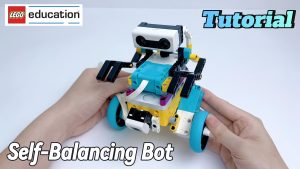
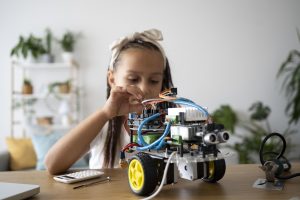
Hands-on practice is the part the children look forward to the most. They pick up their LEGO Spike Prime kits and start assembling their Sumo Bot models. Soon, little “sumo wrestlers” begin to take shape, with distance sensors on the front and color sensors on the bottom, ready for action. After finishing the hardware setup, the children move on to the programming phase. Using a block-based programming environment, they design the robot’s control program. For example, when searching in place, the robot continuously rotates and reads sensor data; when it detects the opponent, it stops rotating and charges forward.
During the first test, the robot successfully turned and found the opponent, and cheers filled the room! However, some small problems arose during testing. For example, after a fierce collision, one robot forgot about the arena boundary and nearly fell out. Luckily, the pre-programmed boundary detection routine kicked in, and the robot quickly retreated, avoiding failure. Through repeated tests and adjustments, the children gradually optimized the robot’s performance, enhancing its capabilities.
Let’s take a look at their achievements!
Results and Future Outlook
After the first phase of learning, the children not only mastered basic sensor principles and programming skills but, more importantly, they experienced engineering thinking: when encountering a problem, first observe and discover; after defining the goal, clearly outline the problem; then, through practice and trial-and-error, improve the design, and eventually find a solution.
Next Episode Preview: In the next class, the children will continue to unleash their creativity, adding bulldozer blades, hammers, and other “weapons” to their robots, while further optimizing the algorithms to improve the robots’ searching and attacking efficiency. A more powerful Sumo Bot is about to be born, and new challenges and exciting battles await. Stay tuned for our next classroom story!